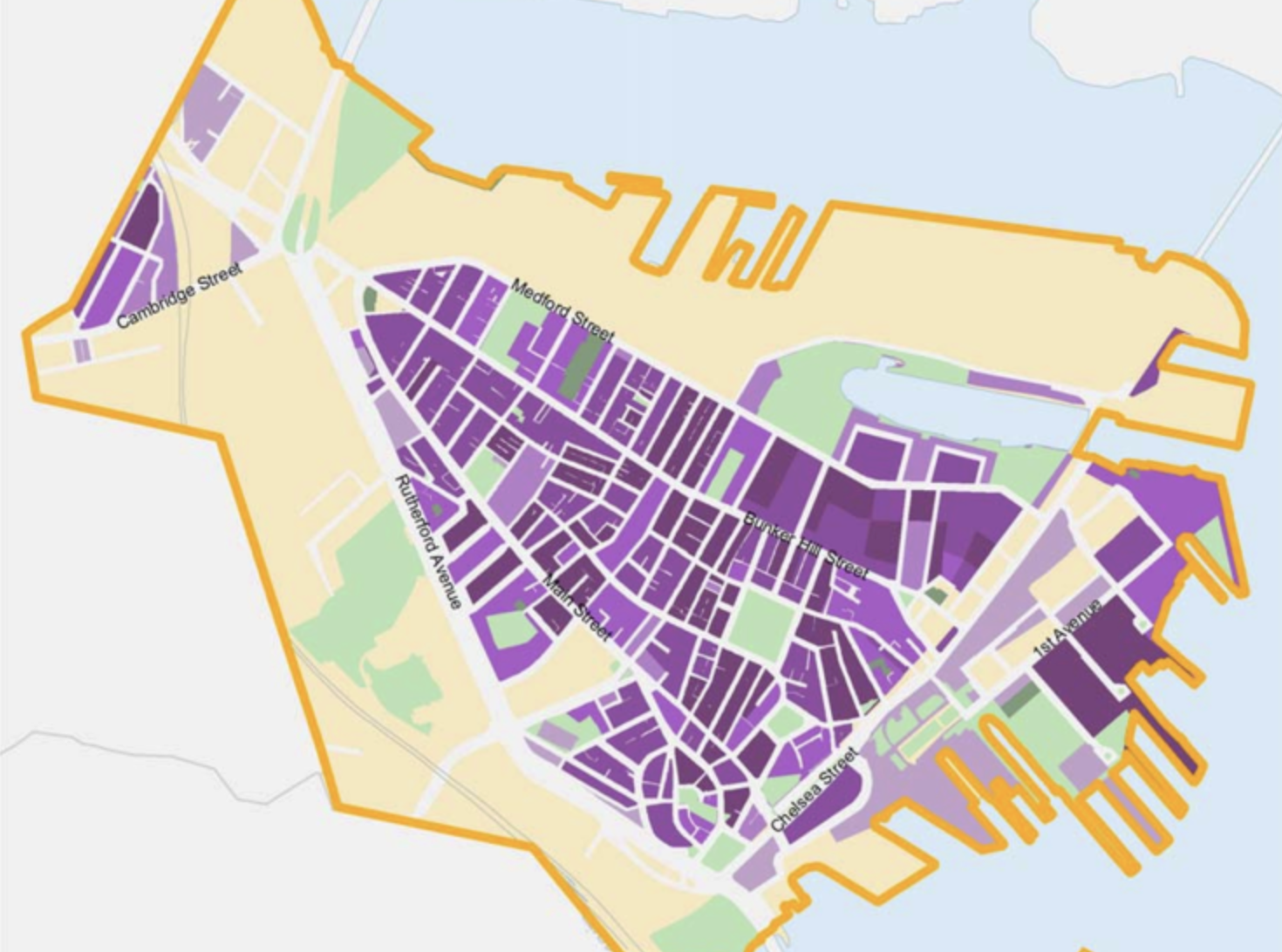
Section 7 Analysis of Needs Section 7.2.4 Community Open Space & Recreation CHARLESTOWN
https://drive.google.com/file/d/1kprL8wlxYgOA8w_D7hmRPDS3cr0CDt4H/view
In its Open Space Plan 2015-2021, the City of Boston’s analysis for Charlestown’s community open space and recreation needs identified a low ratio of 4.67 acres of protected open space per 1,000 residents, well below the city’s average. Despite a compact, dense environment, the neighborhood has a significant lack of active recreation facilities and needs more accessible, “close-to-home” parks to serve its growing population. The plan proposed strategies to address these needs, such as investing in targeted facility improvements at existing parks like Ryan and Edwards Playgrounds and addressing open space access gaps within the neighborhood’s distinct areas.
Key Findings
- Low Open Space Ratio: Charlestown had 4.67 acres of protected open space per 1,000 residents, which was below the citywide average of 7.47 acres.
- High Population Growth: The neighborhood experienced significant population growth between 2000 and 2010, increasing the demand for and burden on existing open space resources.
- Gaps in Active Recreation: A major need in Charlestown, as in other inner-city neighborhoods, was the availability of active recreation facilities, such as athletic fields and tennis courts.
- Importance of Proximity: Residents value and most frequently visit parks closest to their homes, highlighting the need for “close-to-home” parks to encourage greater use.
Recommendations & Actions


- Invest in Facilities: The City of Boston’s Parks and Recreation Department invested over $1 million in capital improvements, focusing on parks like Ryan Playground, Edwards Playground, and Winthrop Square.
- Address Access Gaps: The analysis sought to identify areas within Charlestown that lacked adequate access to open space and to develop strategies to fill these gaps.
- Contextualize Needs: The plan recognized that while neighborhood boundaries are not always relevant to park usage, they serve as useful organizational tools for discussing community-specific needs.
Leave a Reply