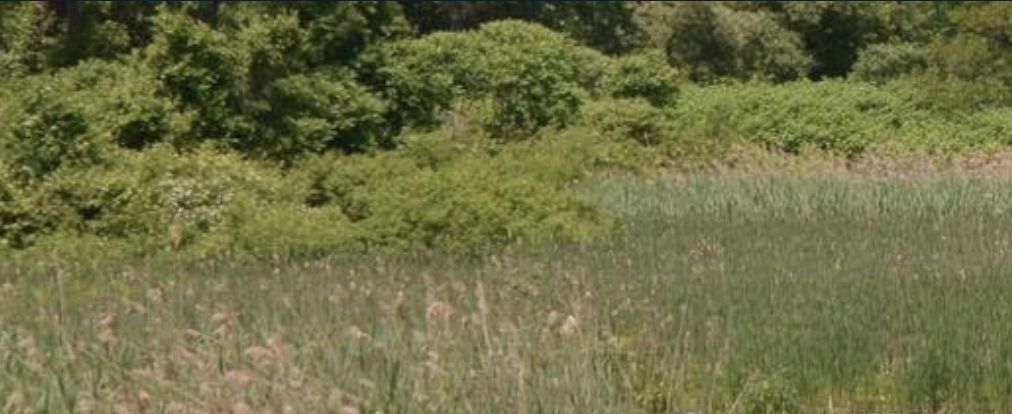
The Boston Wetlands Ordinance gives the City greater authority to protect its wetlands by expanding protections beyond those identified in the Massachusetts Wetlands Protection Act. Comment on the draft Phase III regulations now through December 15.
Page Sections
Our wetlands are crucial to controlling flooding, mitigating extreme heat, and protecting the quality of the City’s water. Protecting wetland resources and natural areas is critical to preparing our neighborhoods and ecosystems for the impacts of climate change. These regulations should enable residents and ecosystems to thrive side by side.
Wetland resource areas perform many ecological services, such as:
- storing floodwater,
- providing wildlife habitat,
- filtering stormwater run-off,
- producing oxygen, and
- reducing the “urban heat island” effect.
These areas are protected under the Massachusetts Wetlands Protection Act and the Boston Wetlands Ordinance. The local ordinance provides guidance for creating local regulations that can protect wetland resources from climate change and enabling these natural areas to protect residents from the impacts of climate change. Due to their complexity, the development of regulations has been separated into three phases.
Phase I and II
In August 2020, Phase I of the wetlands regulations were adopted by the Conservation Commission. This phase included procedural and administrative regulations and outlined the process for submitting an application under the local ordinance and receiving a permit from the Commission.
In February 2022, Phase II of the wetlands regulations were adopted by the Conservation Commission. This phase identified wetland resource areas that are either not protected under state law or do not have performance standards for projects to meet. The following resource areas are protected under these regulations:
- Isolated Vegetated Wetlands (IVW), which are freshwater wetlands that do not border open water
- Vernal pools and vernal pool habitat, which are small, shallow water bodies that fill with water seasonally, as well as their adjacent land, and
- Land Subject to Coastal Storm Flowage (LSCSF), which share the boundaries of the 100-year floodplain.
Community engagement and feedback from stakeholders were critical in developing Phase II regulations. You can review the process and all of the materials considered by the Commission below.
Phase III: Climate Resilience and Environmental Justice
Phase III regulations will explicitly address these components of the Ordinance: climate resilience, extended riverfront, climate equity, and environmental justice.
Focus areas for Phase III
Regulation Development
The regulation development process has been shaped by community and stakeholder input.
The Phase II process:
- Read the proposed Phase II regulations
- Read the public comments
- Read the proposed response to comments
- Read the revised proposed Phase II regulations
- Read the final proposed Phase II regulations
The Phase III process:
In 2021, a Community Advisory Board was formed to help guide the process of developing the third phase of regulations. Residents of Brighton, Dorchester, East Boston, Hyde Park, Mattapan, the North End, Roslindale, and West Roxbury provided initial input on the regulations.
In 2025, the process to finalize the Phase III regulations was restarted with three key groups shaping the process:
- Equity Council – Local residents, advocates, and community leaders who will shape the development of the environmental justice framework
- Technical Advisory Group – Professionals with experience in rivers, harbors, and wetlands, as well as climate adaptation, who will guide the creation of the resilience regulations
- Interagency Team – City staff from other departments who will provide feedback on the regulations based on the policies, plans, and projects they are working on
Draft regulations for each of the Phase III focus areas are currently under review. At the special hearing on October 15, the Conservation Commission voted to open a 60-day public comment period. Public comments are due at 5:00 PM on Monday, December 15, 2025. You can participate in the process by:
- Watching a recording or reviewing the presentation slides from the October 15 special public hearing
- Attending the October 29 Community Information Session
- Reviewing the draft regulations (posted here on October 16)
- Providing comments on the regulations by writing to cc@boston.gov or adding your feedback to this form
Leave a Reply