https://storymaps.arcgis.com/stories/cd9140272cf74aa9997836b3cf1d5349
A Bostonian’s guide to understanding the Climate Action Plan’s 2019 update and your role in fighting climate change
Kat Eshel
January 14, 2021
In October 2019, Mayor Walsh released an updated plan to reduce the pollution that causes climate change. The 2019 update lays out what steps we are taking over the next five years to reduce our emissions as a city. You can read the full report here . We’ve also created this resource to help you know what is in this plan and what pieces are relevant to you as a Boston resident. This plan impacts your day-to-day life, so you deserve to know exactly what’s inside.
We are America’s climate champion, with a target date of 2050 for going 100% carbon-neutral. – Mayor Martin J. Walsh
So here we go! Here are the steps Boston will be taking through 2024 to cut carbon pollution…
First of all, let’s be clear: Scientific experts agree that climate change is happening.
- they agree about the local impact in Boston,
- they agree about how we’re contributing to it,
- they agree that if we don’t act now it will get pretty bad, and
- they agree that today we know everything we need to know to solve the climate crisis.
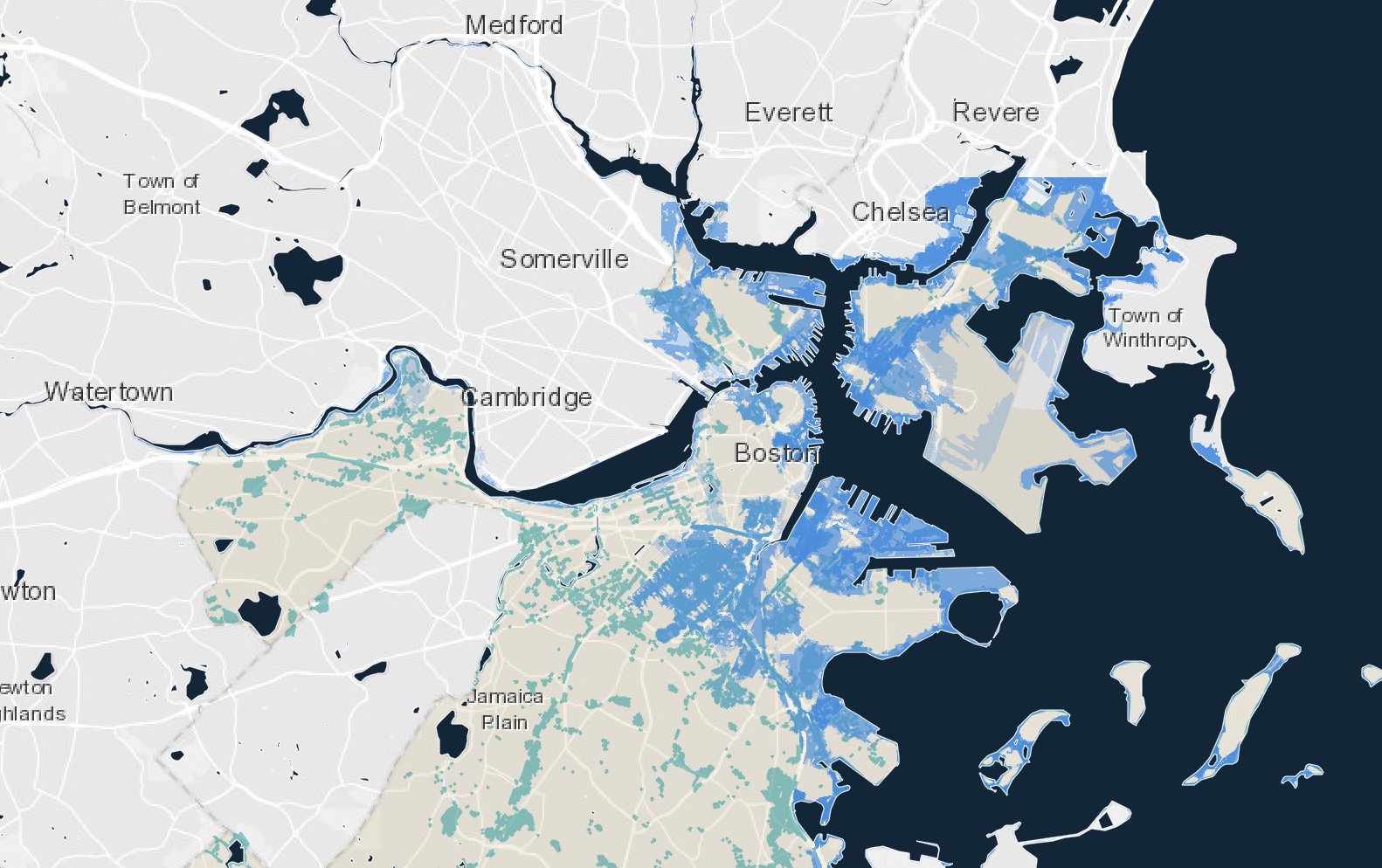
In Boston, a changing climate means extreme heat, stormwater flooding, coastal and river flooding, and sea level rise.
Some of our neighbors are especially at risk from the impacts of climate change, including:
- people of color,
- low-income people,
- women,
- youth,
- disabled people,
- people with limited English language abilities,
- older residents.
These groups are also less likely to have access to the resources necessary for recovery.
That’s why climate action in Boston has two guiding principles for equity:
- People of color and low-income communities must not be disproportionately impacted by climate hazards.
- Benefits from climate mitigation and preparedness efforts should be shared equitably among all people.
As we implement the steps led out in this plan, we’re going to be designing for equity to minimize harm and maximize benefits to our socially vulnerable communities.
Here’s how we as Bostonians are causing the climate to change:
When we burn fossil fuels like oil and gas to power our buildings and transportation systems, and to make electricity, that releases gases like carbon dioxide, methane, nitrous oxide, and ozone. Most of that gas stays trapped in our atmosphere, where it absorbs energy from the sun and from the surface of the Earth. Because of higher concentrations of these gases, we’re overheating our planet. Global warming affects sea levels, weather patterns and temperature all over the globe.
In 2017, the Boston community emitted 6.1 million tons of carbon . Buildings account for 71% of our total emissions, while transportation accounts for most of the remaining emissions. Our inventory does not currently count emissions from everything we buy (but we’re working to change that). For scale, Massachusetts emitted more than 73 million tons of carbon in 2017 .
Here’s the thing, it’s bad. Or rather, it could be. Depending on the choices we make today there are different levels to which we could experience the impacts of climate change mentioned above. In other words … if we work now to reduce our emissions, we will see fewer and much more manageable climate impacts on Boston and our residents.
If you’re skimming, here’s what you need to know so far: Experts agree that climate change is real, it’s caused by us, it could be bad but climate change is solvable. The City is addressing the problem to protect our future and we would love your help.
Our climate action plan has 18 strategies, but all of the solutions we’re proposing all fall into three main categories:
- Buildings (and the energy that powers them),
- Transportation,
- Everything else.
Ready to dive into the details?
Buildings
Why buildings? Because that’s where nearly 70 percent of our emissions come from! Within the building sector, there are two big things we have to think about:
- Buildings that have already been built and;
- the ones that haven’t.
We’re going to walk you through seven of the strategies laid out in the plan to cut carbon pollution in buildings.
Let’s start with strategies to reduce emissions from the buildings that already exist.
#1. We are updating city-owned buildings to be more energy efficient and produce solar energy. We are using a creative financing strategy that allows us to pay for energy upgrades using future cost savings.This program is called the Renew Boston Trust .
*Here are some ways to reduce your energy use at home:
- Sign up for a Mass Save Home Energy Assessment ;
- Wash clothes in cold water and line dry;
- Use a programmable thermostat.
#2. Large buildings in Boston will have to reduce their emissions over time. Did you know? 2,200 buildings account for half of Boston’s carbon pollution. Under our current laws , they report their annual energy and water usage to the City each year. We are developing a carbon “performance standard” for these large buildings. The standard will set pollution limits to ensure they make steady progress towards carbon neutrality.
* Sign up for the Greenovate mailing list to get updates on the process. *
#3. We will buy affordable and clean electricity in bulk for residents. Known as “ Community Choice Electricity ” this program makes energy prices stabler and more affordable, and makes it easier for you to buy clean energy.
* Sign up for the Greenovate mailing list to get major program updates. Tip: You can opt out of the program, but you can also opt up. Opting up means having more of your energy coming from renewable sources.*
#4. We want to deploy local energy systems called microgrids. Our homes get electricity from a regional grid. In a storm event, the grid can experience power outages. Microgrids can keep the lights on in case of power outages. By providing energy security, microgrids can help prepare us for storm events that will be the new normal in climate change.
Pictured right: The Raymond L. Flynn Marine Park is a potential location for a resilient microgrid.
*Learn more about the Smart Utilities Policy online.*
We also want to make sure new buildings constructed in Boston are built as efficiently as possible.
Here are our strategies for addressing new buildings in Boston:
#1. All new municipal buildings will be constructed so that they require zero fossil fuels (that means no oil or gas) and are highly energy efficient. This is called a Zero Net Carbon Building. In December 2019, Mayor Walsh signed an executive order to officially adopt this policy!
Pictured right: Mayor Walsh signs the Executive Order for Zero Net Carbon New Municipal Buildings, accompanied by members of the Boston Student Advisory Council and representatives of the City of Boston and Boston City Council.
* Read Mayor Walsh’s executive order related to carbon-neutral municipal buildings online. *
#2. We are adopting a Zero Net Carbon standard for all city-funded affordable housing. This means we’ll be using our city dollars to deliver healthy homes to the people who need them the most – that’s equity in action.
Featured right: The Bunker Hill Housing Redevelopment in Charlestown will provide 2,699 units of affordable and market-rate housing, and will be designed according to the Passive House standard.
#3. We are developing a Zero Net Carbon standard for large new construction projects. Because the building code is set at the state level, Boston has green building requirements in our zoning code. We are going to ask that private developers start moving to carbon-free buildings too.
Featured right: Boston University’s Center for Computing and Data Sciences is being designed and built to not use fossil fuels at all. Among other pro-climate features, it will be built 5 feet above the city’s suggested level for sea rise, and will include features such as geothermal wells, shading systems, and triple-glazed windows.
*We want you to help us develop these standards. Learn more about the Zero Net Carbon Building Zoning Initiative and sign up to the mailing list to hear about public meetings.*
Transportation
We already have a plan to make transportation in Boston cleaner and more efficient – Go Boston 2030. The Climate Action Plan builds on Go Boston 2030 and highlights some of our priorities for the next 5 years.
Here are the five transportation actions you need to know about:
05/05
#1. Improve and expand active transportation options for walking and biking. Transportation systems that put walking and biking first burn less gas and diesel, cut air pollution, and make streets less crowded, less stressful, and much safer!
*Check out the City’s Bluebikes bike share program or learn to ride in City-run classes ! You can also learn how to fix your own bike at Fix-It Clinics.*
#2. Encourage the use of public transit. Some of the specific ways that we are doing this includes supporting new developments to build near and use public transportation for their residents and employees. We will also be updating regulations for off-street parking in Downtown and other neighborhoods.
*Fun fact about taking the T: You don’t have to watch the road! It’s the ultimate hands-free technology.*
#3. We’re also going to encourage commuters and other travelers to avoid driving alone. When large new developments get permitted, they are asked to minimize additional traffic by offering non-car amenities to future tenants; this is called travel demand management. The City of Boston is updating its TDM and parking policies to encourage people to take transit, bike or walk instead of driving alone.
Pictured right: The Government Center Garage (pre-demolition) is being re-developed to offer more housing and office space, reflecting the changing needs of Downtown Boston.
*Do you live or work in a large building? You can look up its TDM commitments here and learn more about transportation development review here .*
#4. Support citywide electric vehicle use. Our goals are to shift as many drivers into shared and active modes, but to become carbon-neutral by 2050, we need to make sure any remaining vehicles on the road are electric. We will do this by installing public EV charging stations and developing EV car share programs.
Right: Websites like PlugShare allow users to find and review charging stations, and to connect with other plug-in vehicle owners.
*Find charging locations and how-to guides, and learn about rebates and incentives at Recharge Boston , our EV resource webpage.*
#5. Accelerate city-owned vehicles becoming electric. As of 2019, about 30 percent of city vehicles are hybrid or electric cars. We are going to keep ramping that up.
What about other emissions?
Almost all our emissions from energy come from buildings and transportation. But there are many key strategies to addressing climate change that don’t fall in that 99 percent.
- Workforce Development: We have a lot of work to do to make our buildings energy efficient and switch their energy systems. Skilled facilities managers, electricians, carpenters, roofers, plumbers, HVAC technicians, pipe-fitters and contractors, among others, are all key players in making Boston a carbon-neutral community. The City of Boston will work to support and enhance existing training programs and programs to increase the diversity in the building trades through upskilling and incumbent worker training. *Check out existing opportunities offered by YouthBuild Boston , Building Pathways , and the programs at the Mayor’s Office of Workforce Development .*
- Reduce Waste: The city’s strategy for supporting individuals in reducing their consumption, reusing items they already have, and then properly disposing of waste is summed up in Zero Waste Boston. We call all of this “waste reduction work” because the incineration of our waste accounts for a fraction of our total emissions as a city. *There are lots of ways you can start to reduce waste. Start by “bringing your own” – bag, mug, water bottle… Ready to build a new habit? Check out Greenovate’s online climate action guide. *
- City Investments: How and where we invest our money as a city can have an impact on the climate. We can’t be carbon neutral if employee pensions are still funding fossil fuel companies. The city will explore how we can prioritize investments and purchases that are good for the environment.
- Advocate to the Commonwealth of Massachusetts: Every level of government has a unique role to play in addressing climate change. For example, the building code and the MBTA are controlled at the state level. We’re using our voice as Massachusetts’ largest city to support state action to address climate change. We are:
- Supporting state efforts to improve Boston’s transportation system;
- Supporting the Commonwealth in meeting its goal of net-zero greenhouse gas emissions by 2050;
- Advocating for new building and transportation policies that cut carbon.
- Carbon Offsets: Carbon offsets are basically paying for someone else to reduce emissions when you can’t. For example, emergency shelters or hospitals may still need to use gas or another fossil fuel to power life support systems. We are planning to develop guidelines for carbon offsets in the future. This means exploring local carbon offset markets, urban forestry, and resilience benefits in local carbon offsets.
Preparing for climate change
We often hear: “Isn’t climate change already impacting us in Boston?” The answer is “yes”. No matter how successful we are in dramatically reducing our emissions, as the Climate Action Plan makes possible, current and past carbon pollution is changing our climate now. So, we’re also getting ready for the effects of climate change:
- chronic extreme heat;
- more frequent stormwater flooding; and
- coastal flooding due to sea level rise.
Climate Ready Boston is the City’s initiative to prepare for the impacts of climate change. Boston residents are already being affected by these impacts. There are a number of actions we can all take to prepare:
- *Talk to your neighbors about climate change: Part of preparing for climate change means making sure that everyone knows what these changes mean for them, their family, and their home.
- *Prepare your community: Make a list of your family members, friends, and neighbors who may need assistance and check in with them in the event of an extreme heat or flood emergency.
- *Create an emergency preparedness kit: Pre-pack a backpack full of items you might need in a serious flooding event if you were to shelter in place.
- *Subscribe to Alert Boston: This is a great way to stay updated in the event of an emergency. The City of Boston will send you a text, call, or email when an extreme heat event is declared.
- *Find your local cooling centers: Knowing where you can go to stay cool and hydrated is an important way to be prepared. There are public spaces to stay cool located all over the city including Pools, tot sprays, Boston Public Libraries, and community centers.
- *Elevate your mechanicals and install a backflow preventer: This helps ensure that your home is prepared for flooding and sea-level rise.
How can you get involved?
We’ve listed steps you can take in your own life throughout this online report. You can check out other ways to take action in our online climate action guide . You can also sign up to become a Greenovate Boston Leader and help lead climate action in your community!
We also want to hear from you as we continue to develop new policies and programs to cut carbon pollution and prepare Boston for climate change. Sign up to the Greenovate mailing list to get updates about events and open houses, and to hear about volunteer opportunities.
You can learn more about the Environment Department’s work online . We look forward to working with you in our communities to make Boston a healthy, thriving and resilient city for all.
Leave a Reply